It’s 1933 and Jean‑Paul Sartre and Simone de Beauvoir meet their pal Raymond Aron at the Bec‑de‑Gaz bar on the rue Montparnasse. Aron had recently been in Berlin, where he’d encountered the philosophy of a certain Mr. Edmund Husserl, who had this crazy new thing he was calling phenomenology. As Sarah Bakewell tells the story, Aron pointed at the drink in front of him and basically told Sartre that with phenomenology you could make philosophy out of this cocktail.
Sartre was absolutely electrified by the exchange. He got himself over to Berlin to study this stuff for himself, and voilà! Phenomenology becomes a major foundation on which his own philosophy was built.
I love this story because it humiliates philosophy juuuust enough. Aron doesn’t begin with Being, or Truth, or the Soul. He points at booze on the table. It’s easy to hear this as a promise to make philosophy more accessible, as though phenomenology were saying: oh don’t worry, we can use relatable examples. But that’s not really what’s interesting about it to me. The encounter with the drink is where the philosophy begins, which is a much stranger proposition.
I have a habit of assuming that serious thought lives at some higher altitude. If we want to think about something deeply enough, we must ascend out of the café and start looking for those inscrutable forces bearing capital letters: Meaning, Consciousness, Freedom, Art, God, Reality. Meanwhile, the glass is sitting there, sweating onto the table.
One thing phenomenology says is to pay very close attention to experience as it’s actually lived. Not merely hey, that’s an object over there, but the experience of perceiving it, remembering it, wanting it, recoiling from it, recognizing it. Husserl gets considerably more complicated than staring down drinks, obviously. But the concept that smacked Sartre so hard in this encounter was that experience itself could be philosophically inexhaustible.
What exactly is this cocktail before I file it away under “cocktail?” Well…there’s color, which I recognize as apricot even though…hmm…I’m not entirely sure apricot is a color. There’s the cold glass in my hand. Sweetness arriving before bitterness. My expectation of what it will taste like. The café around it. The fact that I’m sitting with these particular people. One of them is watching me drink it, etc. All these memories and preferences and tiny private histories that have somehow become involved in this otherwise innocent beverage.
Naming things is useful, but it also shrink‑wraps them. Cocktail. Café. Friend. Stranger. Job. Website. Tree. Myself. Once something has a name, it becomes very easy to stop encountering it. We know what that is. Move along. The world becomes incredibly efficient and navigable this way, and also slightly dead.
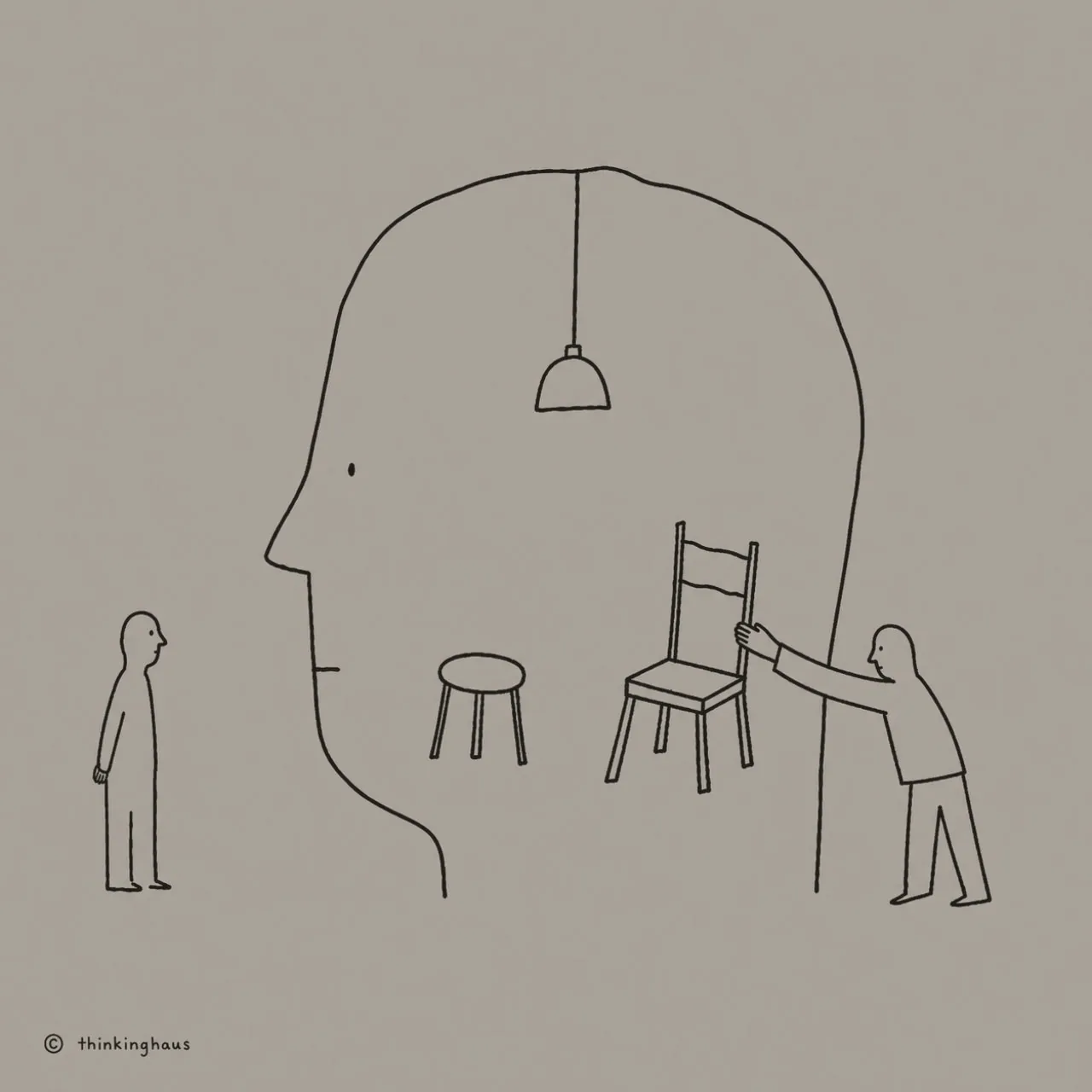
To me, there are actually two encounters happening at that table. Sartre is encountering the cocktail differently, but he’s also encountering Aron: somebody who had gone somewhere, found something that rearranged the furniture in his head, and come back excited enough to try to make his friends see what he’d seen.
Aron didn’t hand Sartre a book or paper, or give him an academic lecture. He looked around the table, found the nearest available object, and said, essentially: this.
There’s something I recognize in that. Some of the most important things I’ve learned from people have arrived badly packaged. A friend gets completely obsessed with a book and starts explaining it before he quite knows how. Someone sends a link saying OMGGGG!!!!!!! You visit somebody’s house and notice the fascinating little system they’ve developed for doing something you’d never previously considered a system at all. Another person has been paying attention somewhere you haven’t, and for a moment you get to borrow their eyes.
The idea totally matters, but so does the enthusiasm. There’s a kind of intellectual friendship in which people don’t simply exchange conclusions…they infect one another with attention. You become interested because somebody you trust has become interested, and their interest is specific enough that you can get utterly electrified by proxy.
I think this is a piece of why Bakewell’s account of existentialism starts here. Existentialism wasn’t produced by a bunch of isolated genius brains emitting streams of books. It developed in a nest friendships, love affairs, arguments, rivalries, cafés, letters, teachers, students, and people enthusiastically mangling one another’s ideas.
Origin stories are suspiciously tidy, of course. Intellectual movements aren’t born on a table one afternoon any more than rivers begin beneath signs saying RIVER STARTS HERE. Sartre already had his own philosophical ambitions. Husserl had spent decades developing phenomenology. Other thinkers were shooting those ideas all over Europe. I think the legend survives because it compresses something messier into a scene you can hold.
The exchange over the drink seems almost embarrassingly small compared with what followed: Sartre, Beauvoir, existentialism, Being and Nothingness, decades of argument about freedom, consciousness, responsibility, and what the hell we’re all doing here. But that’s exactly what I like about it. The big thing doesn’t arrive as a big thing. It arrives as your friend leaning across a café table and saying: look at this.
Last edited September 2, 2026