Leave home with basic supplies. Notice something interesting and walk toward it, allowing another point of interest to supersede the first. Talk to people. Accept dead ends. Eventually, return home.

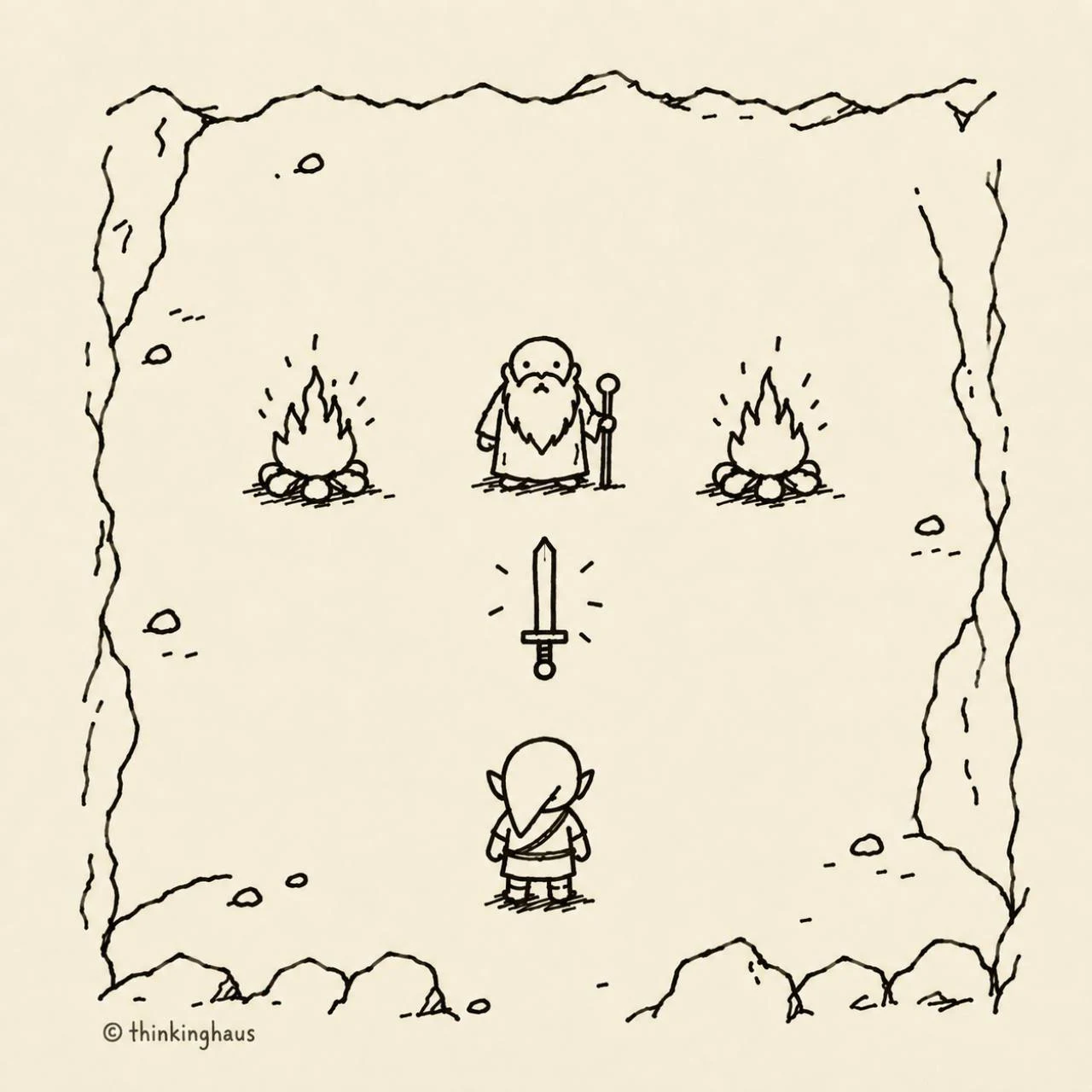
It sounds trivial written out, but there is a real change in attention hidden inside it. Instead of treating the landscape as empty space separating me from destinations, I start treating it as a field of possible interactions.
The adventure‑game metaphor helps because it changes what counts as significant. A strange staircase becomes a path. A shop becomes an encounter. A distant structure becomes something worth moving toward, at least until something else catches my attention. A dead end isn’t wasted time; it is explored territory. The whole thing gives me permission to be inefficient.
The basic rule is simple: treat everything as potentially interesting, and treat public access as a constraint of the game.
That constraint turns out to create exploration. A fenced property isn’t something I cross; it becomes terrain I have to route around. A river without a bridge becomes a world boundary. A footpath becomes valuable because it connects two regions that otherwise seem separate. Public transportation becomes fast travel.
Moving around this way starts to reveal a different topology of where I live: not the version organized around the fastest route from one known destination to another, but the one made out of paths, barriers, crossings, shortcuts, edges, invitations, and things I would normally pass without noticing.
Last edited September 11, 2026