The mainstream minimalist web is about subtraction from an otherwise conventional affluent life: decluttering, capsule wardrobes, screen‑time reduction, etc. Lots of Instagram‑worthy photos of white space and blonde wood.
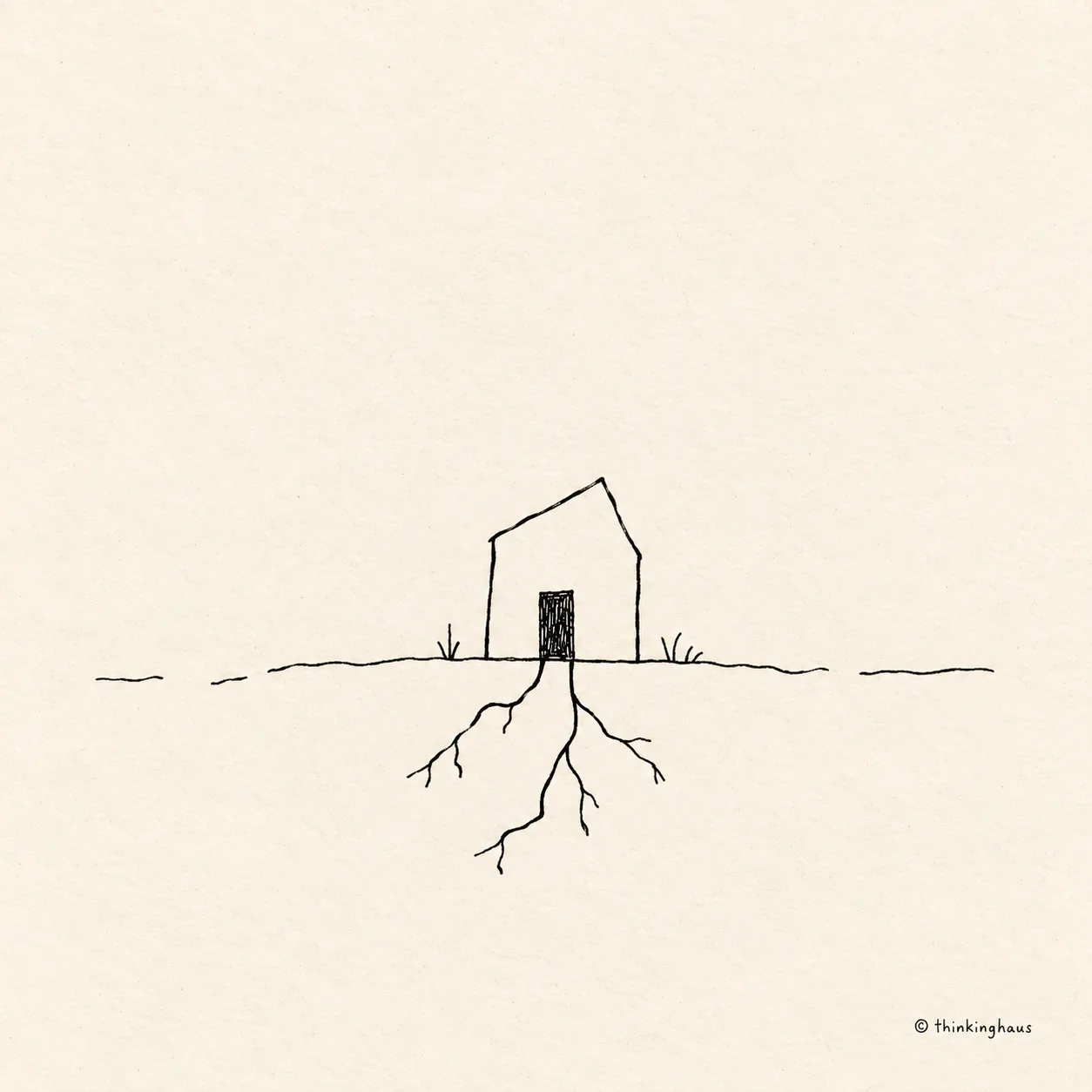
But the much more interesting minimalism material out there is about designing a life whose requirements are intrinsically small. Deep Minimal.
100 Rabbits needs less because the boat imposes constraints. Hiker Backpacker needs less because everything has to travel on a bicycle. MiniMotives asks how much house is actually necessary. Low‑tech Magazine asks how much technology and energy are actually necessary. 3 Mules has roamed the western U.S. with a few mules nonstop for sonething like 40 years.
Authenticity online is now about long‑term commitment and consistency. These people have that in spades. Marie Kondo is a dedicated and inspiring minimalist, but I’m not sure if her life philosophy has resulted in multiple encounters with law enforcement.
It may not necessarily be a better type of less, but it is definitely a deeper one. Here’s my working list. Let me know what I’m missing.
- 100 Rabbits: Rekka Bellum and Devine Lu Linvega live and work aboard a 33‑foot sailboat. What makes this different from lifestyle minimalism is that reduction is treated as an engineering/design problem: fewer electronics, repairable things, open‑source software, food preservation, limited energy, sailing without unnecessary systems, making things yourself.
- Low‑tech Magazine: A solar‑powered site that asks how little energy, machinery and complexity are actually necessary to accomplish things. Recent material covers human‑powered transport, extremely simple heating, solar cooking, passive cooling and adapting buildings seasonally rather than brute‑forcing comfort mechanically.
- MiniMotives: Macy Miller’s site began around designing and building her own tiny house and became a long‑running record of tiny housing as her actual life, including plans, construction, budgets, off‑grid basics, family life and subsequent designs.
- 3 Mules: A man living continuously outdoors for decades, traveling with his mules. The site contains his sleeping locations, expenses, encounters with police, recipes, observations and an argument for the right to move through public space.
- Hacker Bikepacker: Javier Carrasco Cruz combines remote software work with long‑distance bicycle travel. His archive moves back and forth between Linux/kernel programming and crossing countries by bicycle, and includes his actual bikepacking equipment and routes.
- Minafi: Adam Fortuna explicitly defines the project as the intersection of financial independence + minimalism + mindfulness, with minimalism meaning living with what provides value and eliminating what doesn’t.
- Tenth Acre Farm: Instead of assuming self‑sufficiency requires buying acreage and disappearing into the wilderness, it’s about producing useful things and increasing resilience on an ordinary small residential property.
- Mind of a Hitchhiker — Iris Veldwijk has built an enormous personal archive around long‑term hitchhiking, kayaking and a life made possible by carrying relatively little and improvising infrastructure as you move.
Last edited September 24, 2026