I’ve been returning to Andrew Plotkin’s website for about twenty years. Back then, I was obsessed with interactive fiction, and I had never seen anything like the way Spider and Web played with deception, memory, and the role of the player. I was so struck by its craft that I went looking for the person who had made it.
The site runs deep. Games, art projects, essays, software, photographs, talks, science, technical standards, jokes, personal histories, and a library database containing thousands of books are all in there. His so‑called “redundant site map” is less a navigation aid than a warning about what you’re getting yourself into.
Twenty years is a long time to rummage around in somebody else’s basement. I’ve watched projects appear, followed his game development, read essays about things I barely understood, and periodically fallen into parts of the site I’d somehow missed the previous twelve times through.
His book list alone has sent me toward a ton of great fantasy and science‑fiction books I never would have found otherwise. It’s his actual library database: more than three thousand books at this point, with years of comments scattered through it. That’s part of what makes it useful to me. I’m not reading Andrew Plotkin’s Ten Essential Fantasy Novels. I’m snooping around the bookshelves of someone whose taste resonates with mine.
His games are the reason I arrived, and they remain extraordinary. His interactive‑fiction page runs from early experiments through The Dreamhold, Shade, Spider and Web, and a pile of stranger little things. Then there’s Hadean Lands, his enormous alchemical puzzle box and, for me, his magnum opus. The site doesn’t arrange this work into a grand career arc. It reads more like: this is what I’ve been doing.
The standard professional website compresses a person. Here are the three things I am good at. Here are the six projects that prove it. Here is the sharpened paragraph where I explain my unique point of view.
His site does the opposite. The About Zarfhome page says plainly that the site is about what he does and how he does it. He talks about showing drafts, tools, half‑baked ideas, abandoned ideas, finished things, and failures. His phrase for it is “work in daylight.” He makes a distinction I’ve carried around for years: being a professional at one thing doesn’t mean the rest of what you make has to disappear.
The site is mostly plain HTML, and the About page tells the reader to “choose your own damn default background color.” The plainness isn’t neglect. It’s a decision to make the site durable, to let it work anywhere rather than control every pixel.
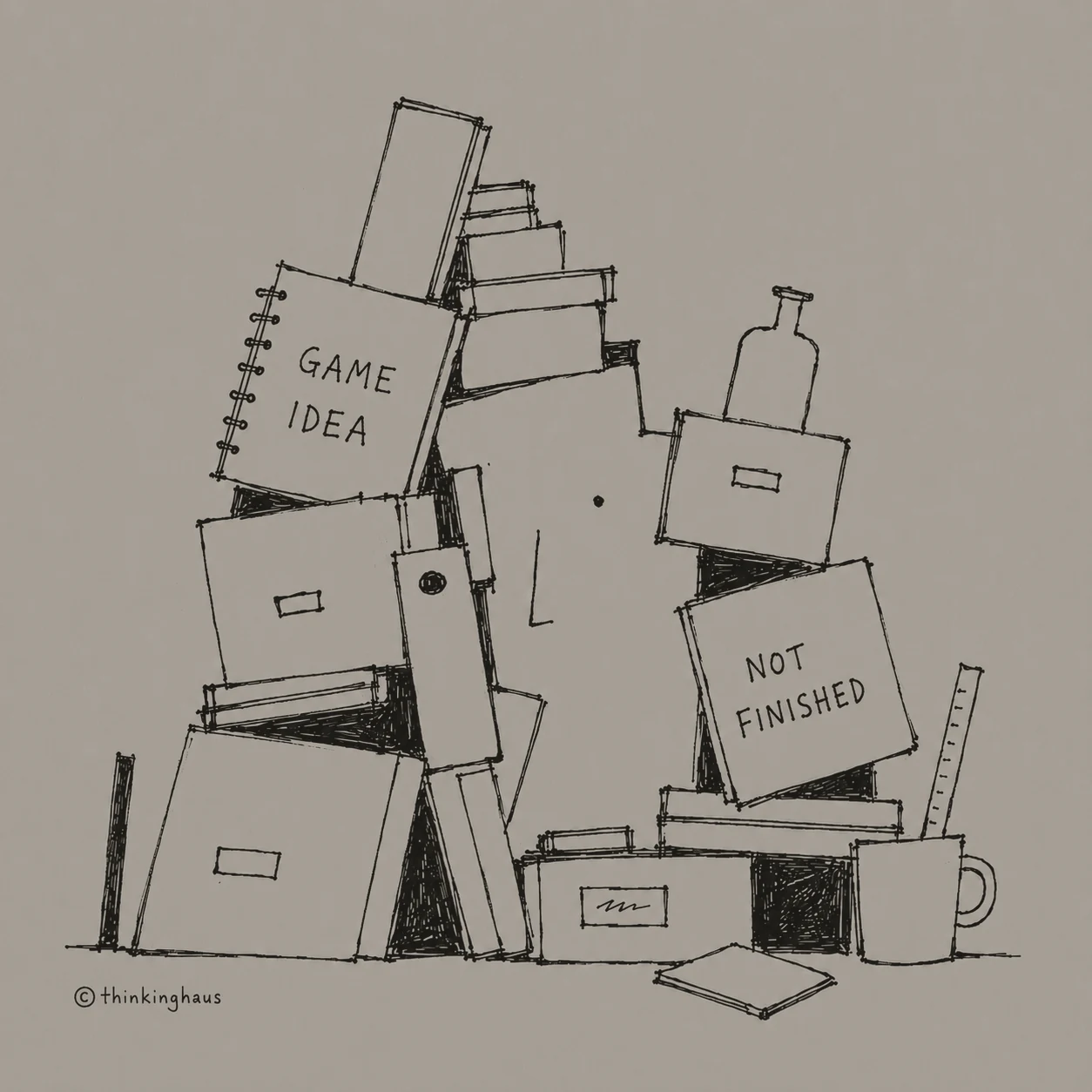
A person keeps putting things somewhere for long enough and eventually patterns emerge that no About paragraph could have manufactured. The kinds of problems he returns to. Books he buys. Jokes he repeats. Technical standards and systems he helps maintain. The game that took years longer than expected. The thing he was excited about in 1997 and the thing he’s still thinking about in 2025.
Because enough of the material survives, the portrait isn’t clean. Even the About page contains a little crack in its own philosophy. In 2000, Plotkin announces his desire to show unfinished projects and failures. In the 2010 update, he admits that, well, he hasn’t done as well at that as he wanted to. As his standards rose, fewer unfinished things made it onto the site. He labels the problem vanity. So the guy who built a website partly to resist hiding unfinished work eventually became self‑conscious enough to start hiding more unfinished work.
The site doesn’t give me access to him in some pure, unfiltered sense. I don’t know him. He’s choosing what goes on the site just like anybody else chooses what to show.
But after twenty years, those choices have left a pattern: what he keeps, what he returns to, what he revises, what he admits he withheld. There’s enough material there that I can feel the contours of somebody’s attention.
Last edited September 2, 2026